A new patio should feel exciting, not stressful. If you are picturing a spot for morning coffee or weekend meals, you are in the right place. Devicesstrange Concrete helps homeowners in San Jose and the San Jose area get ready for a concrete patio project with clear, simple guidance.
Devicesstrange Concrete is a referral service. We do not pour concrete. We connect you with independent local providers in our network who do the work. Before you talk to one, this page walks you through sizing, finishes, drainage and the questions worth asking. Take your time. Ask before you pour. Then request an estimate when you feel ready.
Planning a patio? Start with a calm look at your yard
You want a spot outside that feels like yours. That is a lovely reason to call someone. A new patio is a big step for a yard, but it is not a mystery. Once you know the steps, the whole thing gets much easier to picture.
This page is about new patios. It is not about concrete driveway repair or fixing old slabs.
Why timing shapes the result
Concrete works on its own clock. Once the truck arrives, a provider has a limited window to place, level and finish the slab. That is why the planning matters so much. Slow and steady before the pour makes the pour itself go smoothly.
In the San Jose area, long dry seasons are a popular time to schedule. Winter rain events can move dates around. Wildfire smoke seasons can leave ash in the air, so ask how a provider keeps the surface clean while it sets.
How a pour unfolds, hour by hour
Knowing the timeline helps you stay calm on the day. Here is a typical picture. Your provider may do things a little differently.
- The first hours: The concrete is placed, leveled and finished. The surface is soft. Pets and kids stay clear.
- That evening: The slab holds its shape. A provider may cover it if weather turns.
- The next day or two: Light foot traffic may be fine if your provider says so.
- The first week: Keep furniture, grills and planters off. The slab is still gaining strength.
- About a month: Concrete reaches most of its design strength. Heavy items can wait until then.
Why homeowners choose concrete
Concrete is steady underfoot. It handles chairs, tables and grills. It can be plain, colored or stamped. It also suits many of the stucco ranch homes and older bungalows common in this region. With a little care, a patio can serve you for many years.
What a new patio project includes
Most projects follow the same path. A provider measures, marks the area and prepares the ground. Forms hold the shape. The concrete is poured, finished and left to cure. Details vary, so ask for the steps in writing.
- Site walk and measuring
- Ground prep and a compacted base
- Forms, and often steel reinforcement
- Pouring, finishing and joints
- Curing and cleanup
Sizing your patio
Bigger is not always better. Think about how you will really use the space. A small table for two needs far less room than a dining set and a grill. Many people forget to leave room to pull chairs back.
Try this. Lay out hoses or rope on the grass in the shape you want. Walk it. Set your chairs in it. Then share the measurements with a provider.
Finish options
Broom and smooth finishes
A light broom finish gives grip when the surface is wet. It is simple and widely used. Smooth finishes look sleek but can feel slick, so ask about texture.
Stamped concrete patios
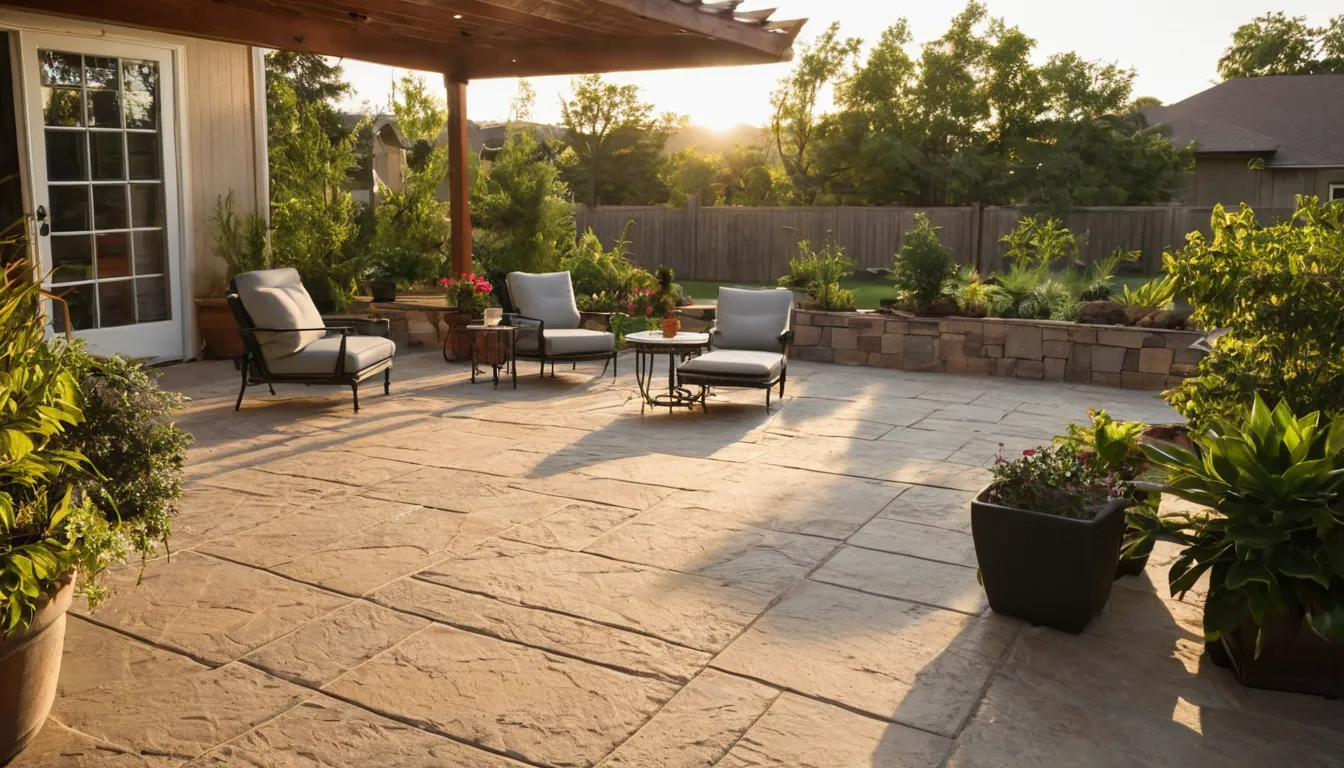
Stamped concrete patios use patterns pressed into the surface. They can look like stone, brick or wood. They take more skill, so ask to see past work.
Color and sealers
Color can be mixed in or added to the surface. A sealer adds protection and can deepen the look. Ask how often it will need to be redone.
Drainage and your house
Water should flow away from your home, not toward it. A good patio has a gentle slope for this. On slab or raised foundations, that slope matters even more.
If you already see cracks or doors that stick near the house, bring it up early. Foundation repair experts are a separate trade, and it helps to sort that out before new concrete goes down.
Questions to ask before you sign
A few questions go a long way. Write them down and keep them nearby.
- Who will be on site, and are they employed or subcontracted?
- What base and thickness will you use?
- How will you handle slope and drainage?
- What does the written warranty cover?
- How do you handle weather delays?
What a good answer sounds like
A good answer is clear and specific. It names the base, the thickness and the timeline. It does not rush you. If a provider takes time to explain, that is a kind sign.
Red flags to notice
- Pressure to sign today
- A big payment demanded up front
- No written quote
- Vague answers about drainage
- A refusal to explain what is covered
How the referral works
Devicesstrange Concrete does not do the work. You share a few details about your project. We connect you with a local provider in our network. The provider visits, talks through your plan and gives you a written quote. You decide at your own pace, with no obligation.
Caring for your new patio
After the first month, care is simple. Sweep it often. Rinse off spills. Wash with mild soap and water. Keep harsh de-icers and strong chemicals away from the surface.
Sealing and small cracks
Reseal when your provider suggests it. Hairline cracks can happen as concrete settles. Many are cosmetic, but ask your provider about any that widen.
What's Included
Site Walk
A provider looks at your yard, takes measurements and talks through slope, access and what you hope to build.
Ground Preparation
The area is cleared and leveled, and a compacted base is added so the slab sits on firm ground.
Forms and Pour
Forms set the shape, then concrete is placed and finished with joints to guide where it may crack.
Curing Time
The slab rests and gains strength. Your provider explains when you can walk on it.
Typical patio costs across the U.S.
Prices change with size, soil, access and finish. These ranges are only typical U.S. figures, not quotes. Ask for a written quote that lists everything, so you can compare providers fairly.
| Item | Typical range | Notes |
|---|---|---|
| Basic broom-finish patio | $6 – $12 per sq ft | Plain gray slab with a simple texture |
| Stamped or textured patio | $12 – $20 per sq ft | Pattern and skill raise the price |
| Small patio, about 12 by 12 ft | $1,000 – $2,500 | Depends on finish and site prep |
| Excavation and base prep | $500 – $2,000 | Soil and access change this a lot |
| Color or dye | $1 – $3 per sq ft | Mixed in or added to the surface |
| Sealer | $1 – $3 per sq ft | May need to be redone over time |
How It Works
Share Your Plan
Tell us about your yard, the size you imagine and when you would like to start.
Get Connected
A local provider in our network reaches out to talk through your project.
Review the Quote
Look over a written quote, ask your questions and take the time you need.
Schedule the Pour
You and the provider agree on a date, and the provider handles the work.
Why Call Devicesstrange Concrete
Ask Before You Pour
A few good questions now can spare you stress once the truck arrives.
Local Providers
Independent providers in our network know the soil, weather and homes in your area.
No Pressure
You can talk, compare and think it over. There is no obligation to move forward.
Clear Picture
You learn the steps, the timing and the red flags before you sign anything.
Other Services
Need concrete patios help in San Jose?
Request a callback to talk through your driveway or patio plans, or send a request and a local provider in our network will reach out.
No obligationConcrete Patios Help FAQ
How long does a new concrete patio take to cure?
Concrete usually sets enough for light foot traffic within a day or two. It keeps gaining strength for about a month. Your provider can tell you when furniture and heavy items are safe.
How much does a new concrete patio cost?
Plain patios often run about $6 to $12 per square foot in the U.S. Stamped patios cost more. Soil, access and finish change the price, so get a written quote.
What should I ask a concrete provider before hiring?
Ask about the base, thickness, drainage, timeline and written warranty. A good answer is clear and specific. Be careful with pressure to sign fast or large payments up front.
Tell us what happened
Request a callback to talk through your driveway or patio plans, or send a request and a local provider in our network will reach out.
No obligation