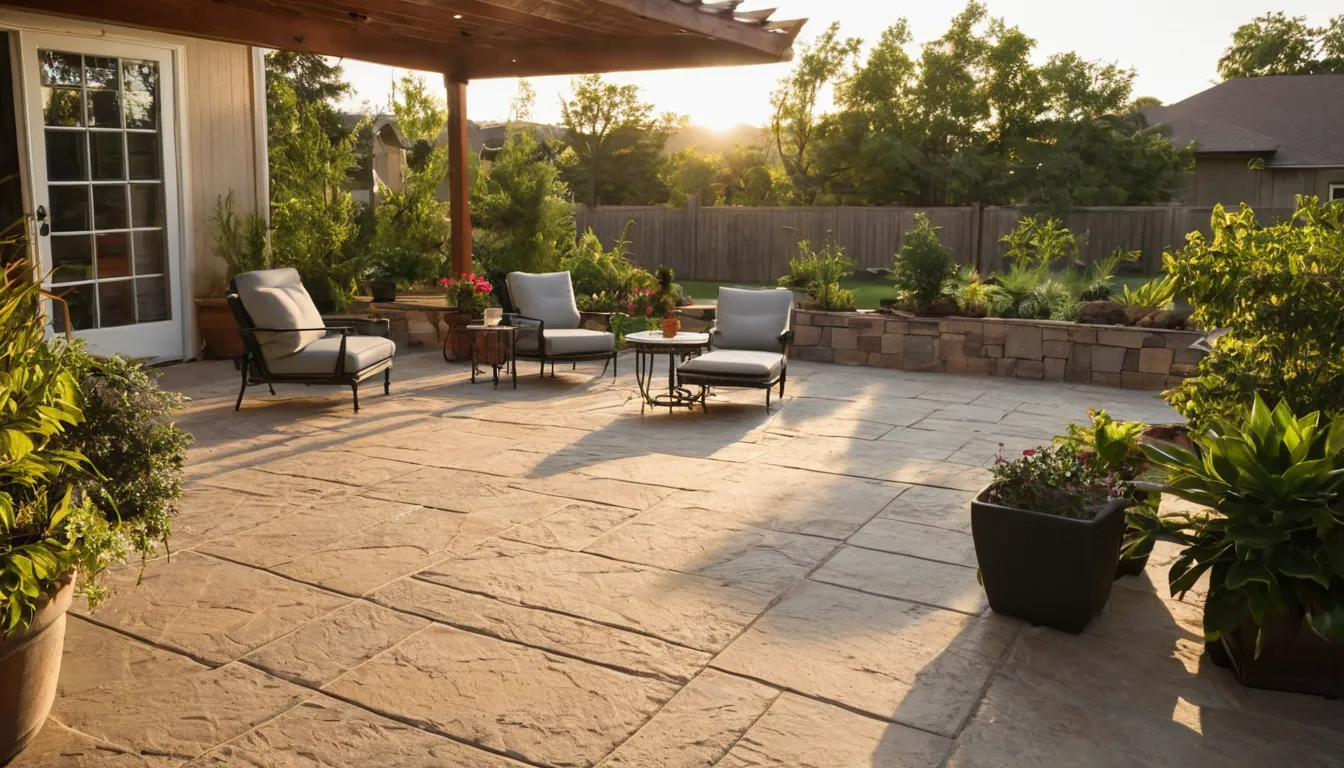
Stamped concrete is poured like any other slab, then pressed with mats so it looks like slate, stone, brick or even wood. You get the pattern you love without the cost of laying every piece by hand. It suits patios, walkways, pool decks and entries, and it fits many stucco ranch homes and older bungalows.
The catch is that the pattern is made while the concrete is still soft. You only get one try. That is why the questions you ask first matter so much. Devicesstrange Concrete is a referral service. It helps you know what to ask, then connects you with independent local providers in our network who do the work. Take your time, and ask before you pour.
Planning stamped concrete? Start here
Stamped concrete is regular concrete that is pressed to look like something fancier. The pattern is set while the mix is soft, so there is no easy do-over. A calm start helps a lot.
This page is about new work, such as stamped concrete patios and entries. If you are after concrete driveway repair, that is a different kind of job.
Timing comes first
Weather picks your window. Long dry seasons are kind to fresh concrete. Winter rain events are not, because a sudden shower can pit a soft surface. Smoke season can drop ash and dust onto a wet slab. Ask any provider how they plan around both.
Good dates fill up, so it helps to ask early. Request a callback to check provider availability for your season.
What pour day looks like, hour by hour
The first few hours
The provider sets forms, checks the gravel base and places any steel. Then the concrete arrives and gets leveled. Color is mixed in or worked into the top.
The middle of the day
This is the part that takes skill. A release powder goes on, and texture mats are pressed in. If the slab is too soft, the pattern slumps. If it is too firm, the pattern will not take.
That evening and the next day
The surface firms up and needs to be left alone. Joints are cut once the slab is ready. Keep pets, kids and furniture off.
How stamped concrete is made
It starts with compacted gravel, then forms and reinforcement like rebar or wire mesh. After the pour, color and stamps go on. Once it cures, the surface is washed and sealed. The sealer deepens the color and helps block stains.
Popular patterns and colors
Ashlar slate, random stone, brick herringbone and wood plank are common picks. Warm tans, soft grays and earthy terracotta tend to sit nicely beside stucco. On a 1950s to 1980s tract home, a simple pattern that echoes the house often looks calmest. Look at sample boards outside, in real daylight.
Where stamped concrete works well
Patios, walkways, pool decks and porch entries are the usual spots. Mild coastal temperatures are gentle on it. Shaded or sloped areas may need a slip-resistant sealer. Ask how the new concrete flatwork will meet your slab or raised foundation, so water drains away from the house.
Stamped concrete vs. pavers
Stamped concrete is one seamless surface. It goes in faster and has fewer joints for weeds. Its color can fade in strong sun, and it may crack along a line.
Pavers are individual pieces. A damaged one can be lifted and swapped. They cost more to lay and can shift over time. Neither one is wrong. It comes down to your look, budget and patience.
Questions to ask before you sign
What a good answer sounds like
A good answer is clear and specific. Ask how thick the slab will be, what base goes under it, and how the provider handles rain on pour day. You should hear plain details, not a sales pitch.
Red flags
Watch for these:
- A quote with no written scope
- Pressure to pay everything up front
- No answer about weather plans
- Vague talk about sealer or joints
How long the job takes
Expect a few days of prep, one pour day, then curing. Most people can walk on it lightly after a couple of days. Furniture often waits about a week. Vehicles wait longer. Your provider will give you the real schedule.
Caring for stamped concrete
Sweep it often, and rinse off ash after smoke season. Use a gentle cleaner. Plan to reseal every few years. Hairline cracks can happen. If a slab sinks or shifts, foundation repair experts may need to look at the cause first.
Choosing a provider
Ask to see photos of finished stamped work. Get a written quote that lists the pattern, color, sealer and joints. Slow and steady is a fine way to hire. Ask before you pour.
What's Included
Pattern Choices
Providers can talk you through slate, stone, brick and wood looks before anything is poured.
Color and Sealer Options
Ask how color is added and which sealer finish fits your yard, sun and foot traffic.
Base and Reinforcement
A solid gravel base and steel help the slab stay flat and hold up over time.
Cutting and Finishing
Joints are cut and the surface is sealed so your new slab looks tidy and lasts.
What stamped concrete may cost
Prices change with size, pattern, color, access and local rates. These are typical U.S. ranges only. Always get a written quote that spells out exactly what is included.
| Item | Typical range | Notes |
|---|---|---|
| Basic stamped patio | $12 – $18 per sq ft | One color, simple pattern |
| Detailed pattern, multiple colors | $16 – $25 per sq ft | More labor and skill needed |
| Small stamped patio (200 sq ft) | $2,400 – $5,000 | Size and prep change the total |
| Stamped walkway or entry | $1,500 – $4,500 | Short runs can cost more per foot |
| Stamped driveway | $7,000 – $15,000 | Thicker slab and more reinforcement |
| Sealing and resealing | $1 – $3 per sq ft | Needed every few years |
How It Works
Share Your Plans
Tell us where the stamped concrete will go and what look you like, then take it from there.
Get Connected
A local provider in our network reaches out to talk through your project and timing.
Review the Estimate
Read the written quote, ask your questions, and compare scope, pattern, color and sealer.
Schedule the Work
If it feels right, you and the provider pick a date that fits the weather.
Why Call Devicesstrange Concrete
Ask Before You Pour
You learn which questions matter, so you feel steady before you talk to anyone.
Clear Answers
Know what a good answer sounds like, and what a red flag is.
Local Providers
Independent providers in our network know local weather, soil and common home styles.
No Pressure
Request an estimate when you are ready. There is no obligation to hire.
Other Services
Need stamped concrete in San Jose?
Request a callback to talk through your driveway or patio plans, or send a request and a local provider in our network will reach out.
No obligationStamped Concrete FAQ
How long does stamped concrete last?
With good prep and regular sealing, stamped concrete can last many years. Sun, weather and use all play a part. Resealing every few years helps keep the color and surface looking fresh.
Does stamped concrete crack?
Any concrete can develop hairline cracks. Cut joints give it a planned place to crack, and a solid base helps reduce movement. Ask the provider how they place joints so cracks are less noticeable on your pattern.
Is stamped concrete slippery when wet?
A glossy sealer can be slick when wet. Ask your provider about a slip-resistant additive, especially for pool decks, shaded patios and sloped walkways. It is a small step that adds comfort.
Tell us what happened
Request a callback to talk through your driveway or patio plans, or send a request and a local provider in our network will reach out.
No obligation